Tehanld Bottom Loading Water Cooler Dispenser
Tehanld's water cooler dispenser is built for households and offices that want cold, room-temperature, and hot water on demand — without the overhead lifting that makes traditional top-loading coolers such a hassle. The bottom-loading design accepts 3 or 5 gallon bottles, keeps cold water below 45°F and hot water between 185–203°F, and includes a two-step child safety lock on the hot spout. It's a practical fit for kitchens, home offices, and living rooms where both adults and kids use the unit regularly.

The Tehanld Water Dispenser
Bottom Loading Water Cooler Dispenser
See on AmazonSee more products
Discover the full product lineup with current selection on Amazon.
All products on AmazonKey Specifications
One model in the Tehanld water dispenser line — here are the full specifications for the bottom-loading unit.
| Model Number | TH0737MS |
|---|---|
| Color / Finish | Metallic Silver, Aluminum Alloy |
| Loading Style | Bottom-loading (3 or 5 gallon bottles) |
| Dimensions (D × W × H) | 12.2" × 13.2" × 41" |
| Water Temperature — Cold | Below 45°F |
| Water Temperature — Hot | 185–203°F |
| Water Temperature — Room | Room temperature (unheated/uncooled) |
| Child Safety Lock | Two-step lock on hot spout |
| Empty Bottle Alert | LED indicator |
| Cooling Refrigerant | R134a compressor |
| Installation Type | Freestanding |
| Style | Modern |
| Manufacture Year | 2025 |
| Customer Rating | 4.2 out of 5 stars (175 ratings) |
This unit is the right fit for kitchens, home offices, and living rooms where both hot and cold output matter daily — and where bottom-loading makes regular bottle swaps practical for one person without help.
What to Know Before Buying This Dispenser
The most important decision in this category isn't brand — it's loading style. A top-loading cooler requires you to lift a full 5-gallon bottle (roughly 42 lbs) overhead, invert it, and seat it into the opening without spilling. A bottom-loading unit like this one lets you slide the jug into the cabinet at the base and let an internal pump do the lifting. If you refill frequently, live alone, or have anyone in the household who can't safely lift 42 lbs over their head, bottom-loading is the only configuration worth considering.
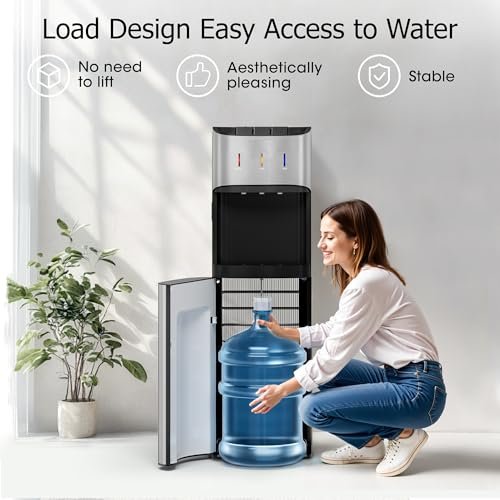
The second decision point is temperature range. This unit delivers three outputs: cold water below 45°F, room temperature, and hot water between 185–203°F. That hot range matters more than it sounds — most black and herbal teas steep properly at 200°F, and water that's just "warm" (under 160°F) won't steep properly or sanitize a travel mug. If you're replacing a kettle or want one appliance that covers both drinking water and hot beverages, confirm the hot output range before buying. This one actually hits it.
Third, think honestly about placement. The unit stands 41 inches tall — about counter height — and has a footprint of 12.2 inches deep by 13.2 inches wide. It fits alongside a refrigerator, in a hallway nook, or in a home office without dominating the wall. The metallic silver aluminum alloy finish reads as an appliance without looking industrial. One thing to be direct about: the dispenser makes some noise during heating and cooling cycles. It's not appropriate for a bedroom at night, but in a kitchen, living room, or office during waking hours, the consensus from owners is that the noise level is manageable and not disruptive.
Which Households Actually Get the Most Out of This
The bottom-loading dispenser makes the most sense for households where someone refills the bottle at least once a week. At that frequency, the ergonomic difference between sliding a jug into a floor-level cabinet versus hoisting it overhead adds up fast — and it becomes even more significant for anyone with a back issue, limited grip strength, or who is refilling solo without a second person to help stabilize the bottle. Families with children benefit additionally from the hidden bottle design: the jug sits behind a closed cabinet door rather than sitting exposed on top of the unit, which removes one source of accidental bumps and spills.
For offices with three to eight people, a hot-cold-room-temperature dispenser covers morning coffee prep, afternoon tea, and all-day hydration without a separate kettle or water filter pitcher taking up counter space. The 185–203°F hot output is specific enough to replace a kettle for most hot beverage uses — instant coffee, pour-over, herbal and black tea — though it won't replace an espresso machine. If your office workflow involves a Keurig or a separate pod machine, this dispenser handles everything else and frees that counter space.
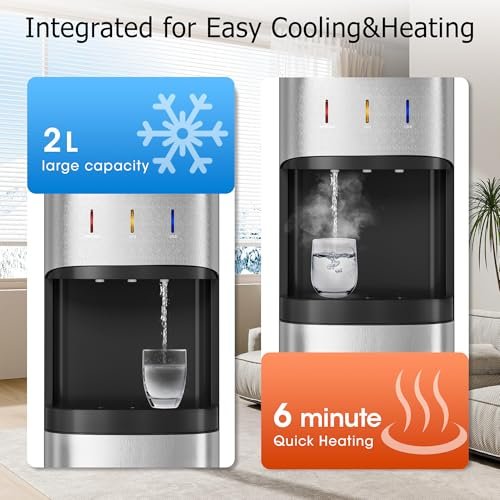
Households switching away from single-use plastic water bottles will find the math works quickly: a 5-gallon bottle of filtered water typically replaces dozens of individual bottles per week, and having both hot and cold output on demand reduces the impulse to buy bottled drinks or heat water separately. The LED empty-bottle alert removes the guesswork about when to reorder — it signals before the pump runs dry, which protects the internal pump from dry-cycling and extends the unit's mechanical life.
Setup, Maintenance, and Safe Daily Operation
Setup is straightforward, but one step matters more than the rest: the bottle-detection probe inside the base cabinet must be correctly seated before first use. This probe tells the internal pump when a bottle is present and when it's empty. Skipping or misseating the probe is the most common source of early mechanical complaints — not a hardware failure, but a setup step that gets rushed. Take the extra two minutes to confirm it's properly installed before loading the first bottle.
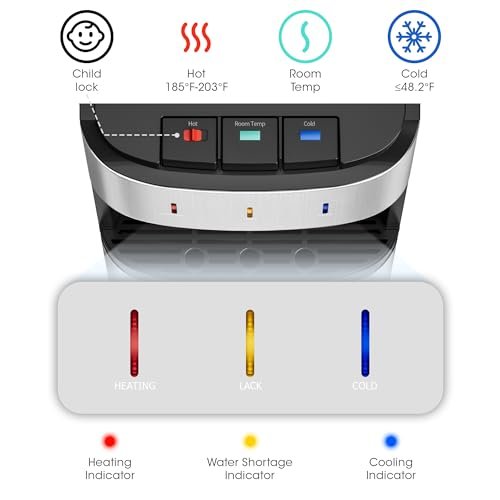
The child safety lock on the hot spout requires two deliberate steps to activate — unlock, then press — rather than a single button press. In practice, this means young children cannot accidentally dispense 200°F water by pressing the button while exploring. Teach older children the unlock sequence if they're allowed to use the hot spout, and leave the lock engaged by default when the dispenser is unattended. Room-temperature and cold water dispense with a standard single press and carry no equivalent burn risk.
For ongoing maintenance, the internal reservoir and drip tray should be wiped down regularly — the drip tray accumulates water quickly if glasses are pulled away before dispensing fully stops. The exterior aluminum alloy surface cleans easily with a damp cloth; avoid abrasive cleaners that can dull the metallic finish. If the unit will sit unused for more than a few days (during travel, for example), drain the bottle and leave the cabinet door open to allow airflow and prevent any moisture buildup inside the base. The R134a compressor cooling circuit requires no user maintenance under normal operation.
Frequently Asked Questions
Does bottom-loading actually make bottle swaps easier, or is it just marketing?
It's a genuine mechanical difference, not a framing choice. With a top-loader, you lift a full 5-gallon bottle — approximately 42 lbs — overhead, invert it, and seat it into the opening. With this unit, you open the base cabinet, slide the bottle in upright, and connect the probe. The internal pump draws water up. There's no lifting above waist height, no inversion, and no risk of spilling 5 gallons on the floor mid-swap. For anyone refilling solo or with any physical limitation, it's a meaningful improvement over top-loading designs.
Is the hot water actually hot enough to steep tea, or does it just get warm?
The hot output range is 185–203°F. Standard recommendations for black tea and most herbal teas fall between 195–212°F. Green tea steeps at 160–180°F. This dispenser reaches and sustains the range needed for black and herbal teas without a separate kettle. It also handles instant coffee and pour-over at the temperatures most people use. What it won't do is produce the pressurized extraction that espresso requires — but for any standard hot beverage, the output range is sufficient.
How loud is this dispenser during normal use?
Be direct here: this is a compressor-based appliance, and it makes noise during heating and cooling cycles. It is not silent. Owners consistently describe the noise as acceptable in a kitchen or office during the day — not disruptive to conversation or work — but it's not a unit to place in a bedroom or a quiet study where any mechanical sound is a problem. If near-silent operation is your first priority, a compressor-based dispenser of any brand is not the right choice for that placement.
What does the child safety lock actually do, and how does it work?
The hot spout has a two-step physical lock: you unlock it first (lift or slide the guard, depending on position), then press the dispense button. A single accidental press on the hot button without first unlocking it does nothing. Cold and room-temperature spouts dispense with a standard single press and carry no equivalent burn risk. This design means young children who haven't been shown the unlock sequence cannot accidentally dispense 200°F water. Leave the hot lock engaged by default when the unit is unattended.
What does the LED empty-bottle alert actually tell me, and when does it go off?
The LED indicator signals when the bottle-detection probe registers that the bottle is nearly empty — before the pump runs completely dry. This matters because running a water pump with no water to move is one of the fastest ways to shorten its mechanical life. The alert gives you enough time to reorder or swap the bottle before the pump dry-cycles. It also removes the guesswork of estimating how much water is left in a bottle sitting inside a closed cabinet where you can't see it.
What's the most common setup mistake to avoid on first use?
Not seating the bottle-detection probe correctly before loading the first bottle. This probe sits inside the base cabinet and tells the internal pump when a bottle is present and when it's empty. If it's misseated or skipped during setup, the pump either won't activate or won't read the bottle level correctly — which gets reported as a mechanical fault, but is actually a setup step. Take the time to confirm the probe is properly installed before closing the cabinet door and powering the unit on for the first time.